How soon will I see results from PRP or GFC?
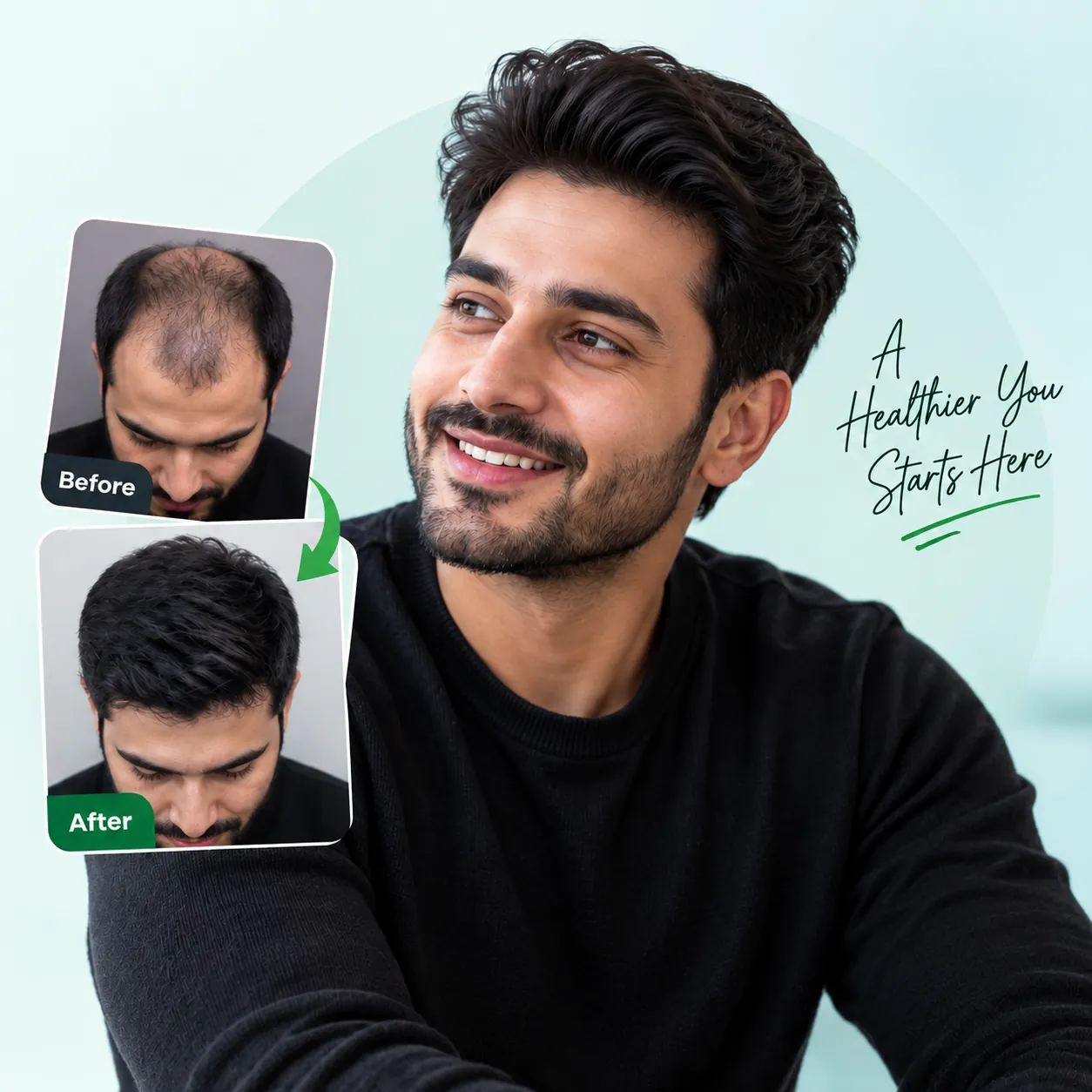
Reduced shedding is often noticed within 6–8 weeks, with thickness improving over three to six months. Progress is tracked with standardised photographs.
Related treatment
Ask a follow-up question
Instant answers from the clinic's own notes. General information, not a diagnosis.
General information only. A doctor confirms what applies to you at the consultation.
People also ask
What is PRP treatment for hair?
PRP (Platelet-Rich Plasma) uses a concentrate of your own blood platelets, injected into thinning areas of the scalp. The growth factors can help reduce shedding and thicken hair that is weakening but still alive.
Full answer →What is GFC treatment for hair?
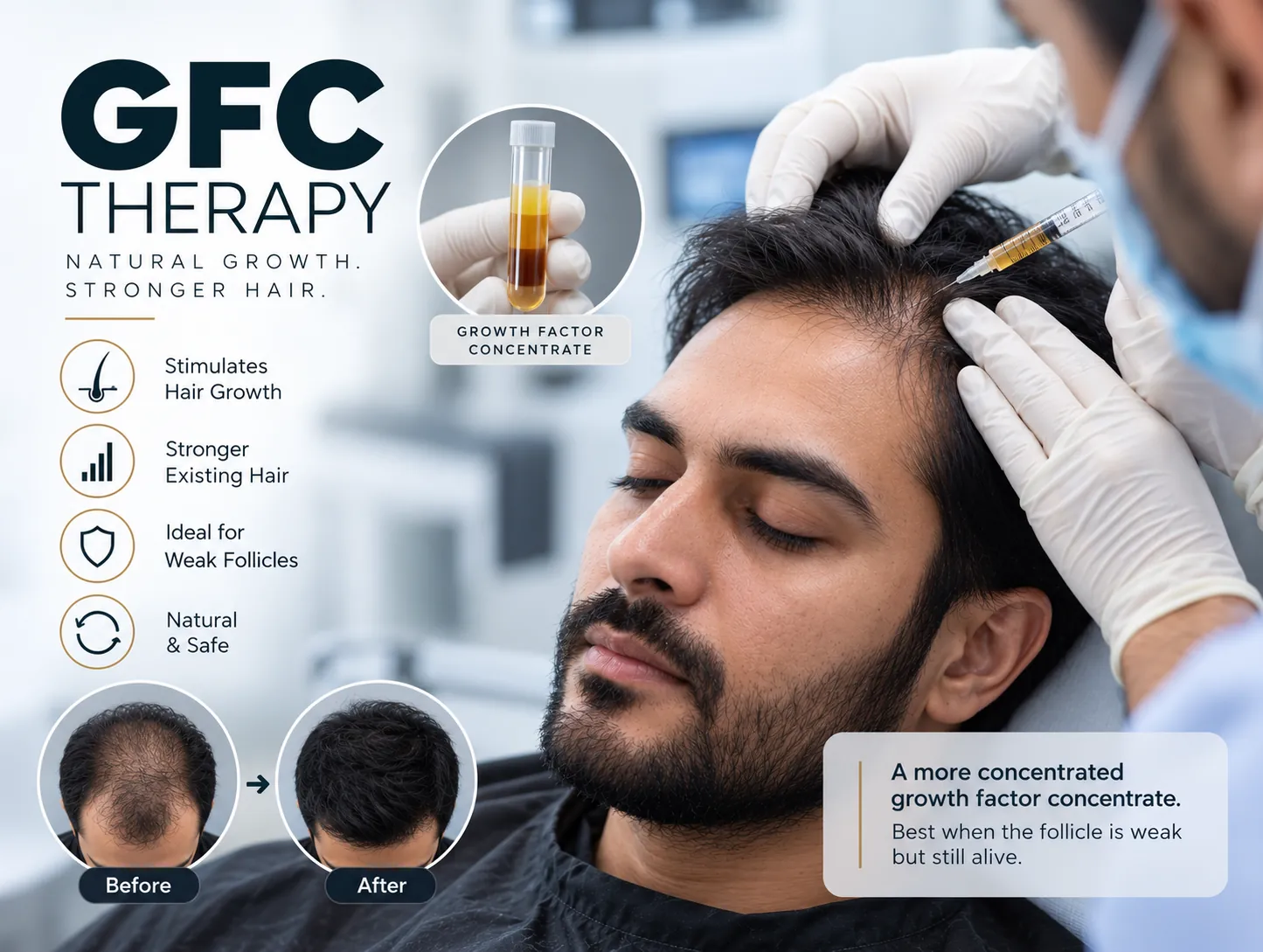
GFC (Growth Factor Concentrate) is a more concentrated, purified preparation of growth factors from your own blood. It is used for early and diffuse thinning and often gives a stronger response than standard PRP.
Full answer →PRP vs GFC — which is better?
Both come from your own blood. GFC is more concentrated and is often preferred for early thinning; PRP is widely used and effective for many people. Your trichoscopy decides which suits you.
Full answer →How many PRP sessions are needed?
A typical plan is one session a month for three to four months, then maintenance every few months. The exact plan depends on how your scalp responds.
Full answer →Does PRP regrow hair on a bald head?
No. PRP strengthens follicles that are still alive; it cannot restart follicles that have completely stopped producing hair. Bald areas need a transplant.
Full answer →Is PRP painful?
There is mild discomfort from the injections, kept low with numbing. Sessions take about 20–30 minutes and you can return to work the same day.
Full answer →Can PRP be done after a hair transplant?
Yes. PRP or GFC is often used after a transplant to support healing and protect native hair around the grafts.
Full answer →Are there side effects of PRP?
Usually only mild tenderness, redness or a slight headache for a day. Because it uses your own blood, allergic reactions are very unlikely.
Full answer →