Hair Fall in Men: 9 Common Causes and When to See a Doctor
Genetics is the usual suspect, but thyroid, iron, stress, diet and medicines all play a part. How to tell what is driving your hair fall.
HRG Clinic Team·Updated 04 Sep 2026·6 min read Medically reviewed by HRG Medical Team
Key takeaways
Male pattern baldness is the most common cause, but not the only one.
Thyroid, iron and vitamin D are worth checking.
Sudden heavy shedding after illness or stress often recovers.
Early treatment protects the hair you still have.
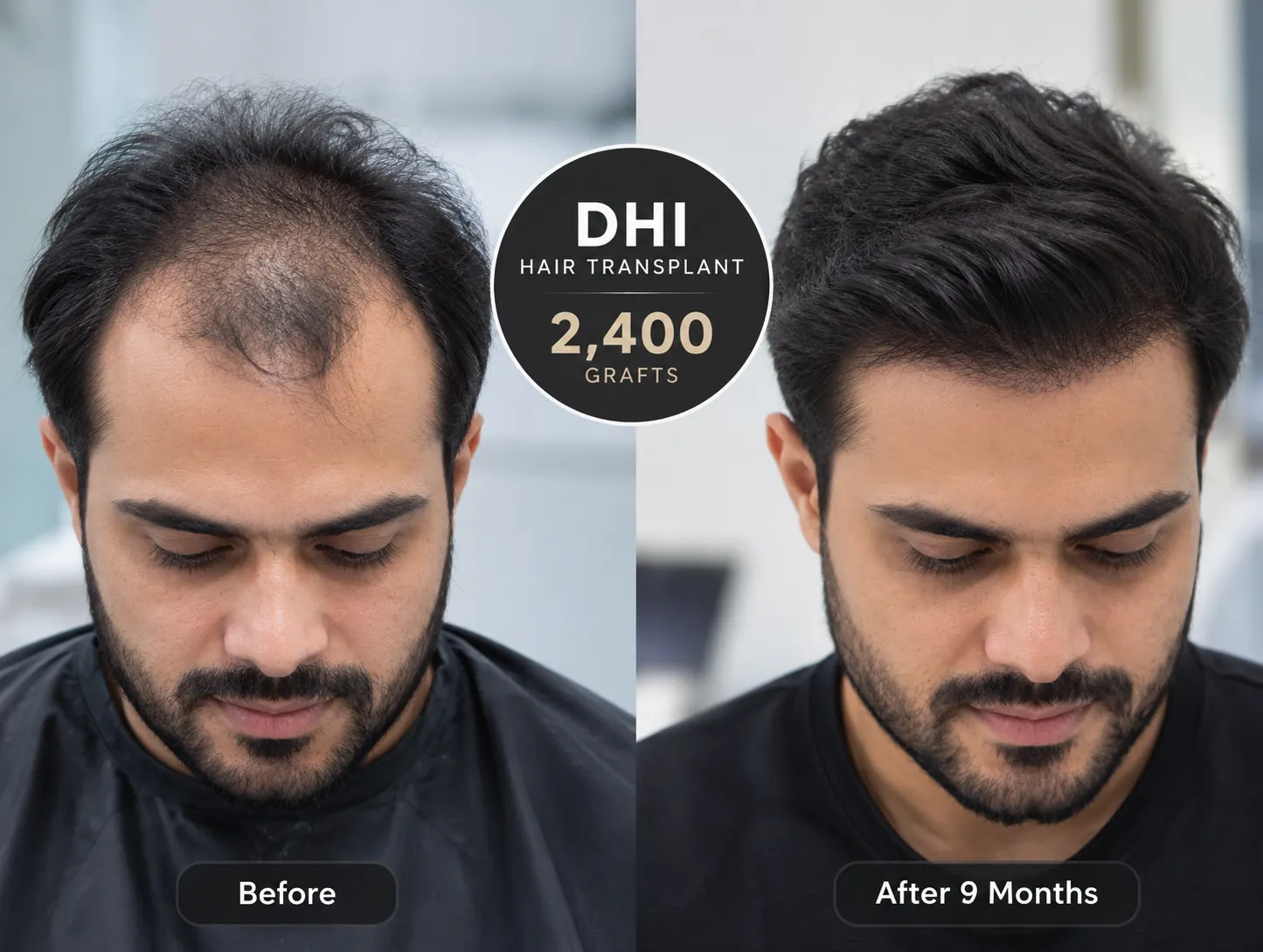
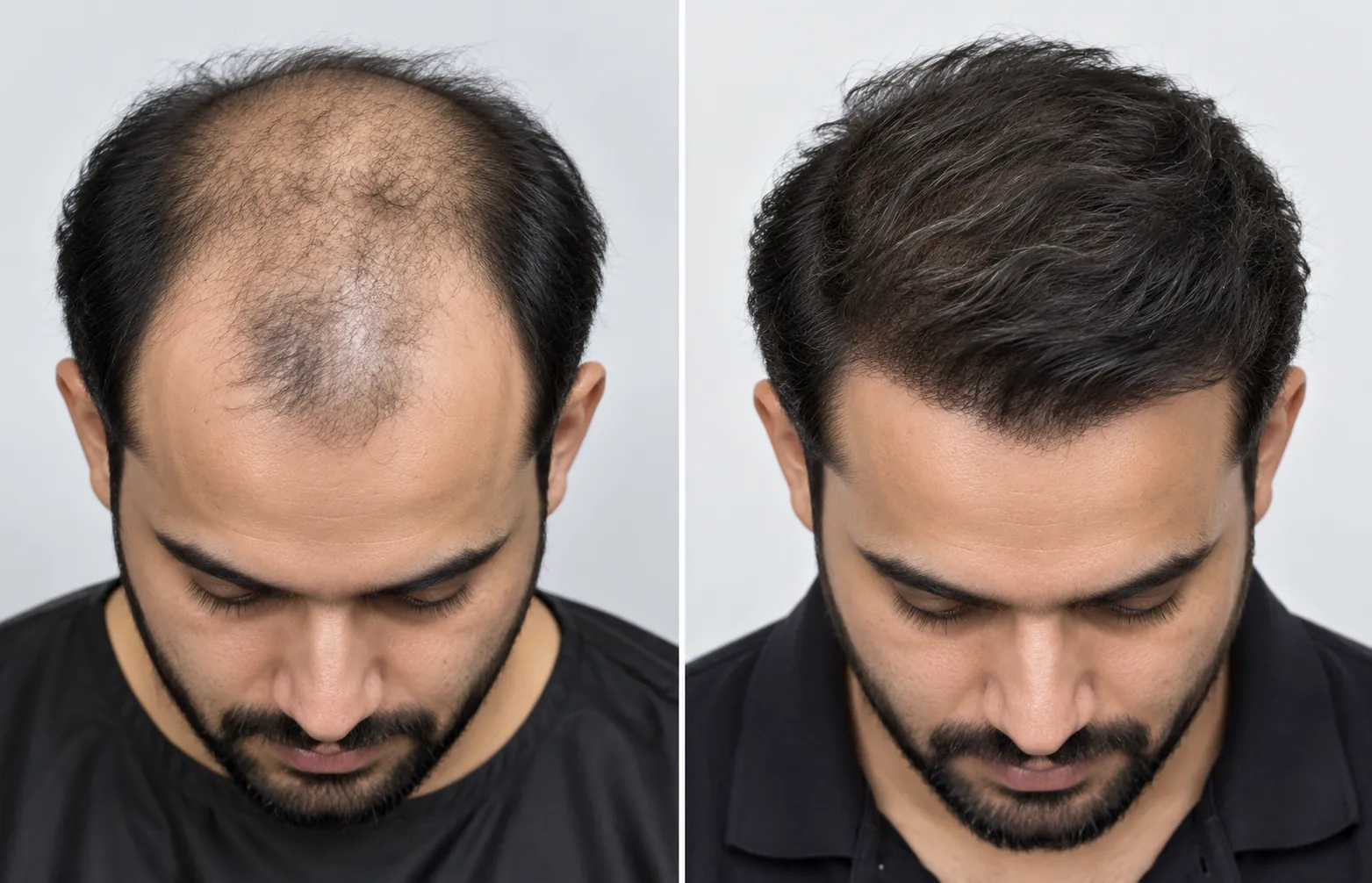
Male pattern baldness — genetic sensitivity to DHT, showing as a receding hairline or crown thinning.
Stress — major stress can trigger heavy shedding months later.
Thyroid imbalance — both under- and over-active thyroid can cause hair fall.
Iron deficiency — more common than people think.
Vitamin D or B12 deficiency.
Crash dieting or low protein.
Illness or fever — shedding can follow a few months later.
Certain medicines.
Scalp conditions like severe dandruff or infection.
When to see a doctor
If shedding lasts more than a couple of months, your hairline is visibly receding, or you see patches, get a trichoscopy. Acting early protects follicles that are still alive.
Frequently asked questions
Can male pattern baldness be reversed?
It cannot be cured, but it can be slowed with treatment, and bald areas can be restored with a transplant.
Should I get blood tests for hair fall?
If shedding is heavy or sudden, checking thyroid, iron and vitamin D is sensible.
Ask HRG AI about this article
Instant answers from the clinic's own notes. General information, not a diagnosis.
HRG AI answer
General information only. A doctor confirms what applies to you at the consultation.
This article is general information about procedures offered at HRG Skin and Hair Clinic. It is not a diagnosis — book a free consultation for advice on your own scalp or skin.
HM
Reviewed by HRG Medical TeamHRG Skin and Hair Clinic, Sector 11, Rohini, Delhi · Last updated 04 Sep 2026