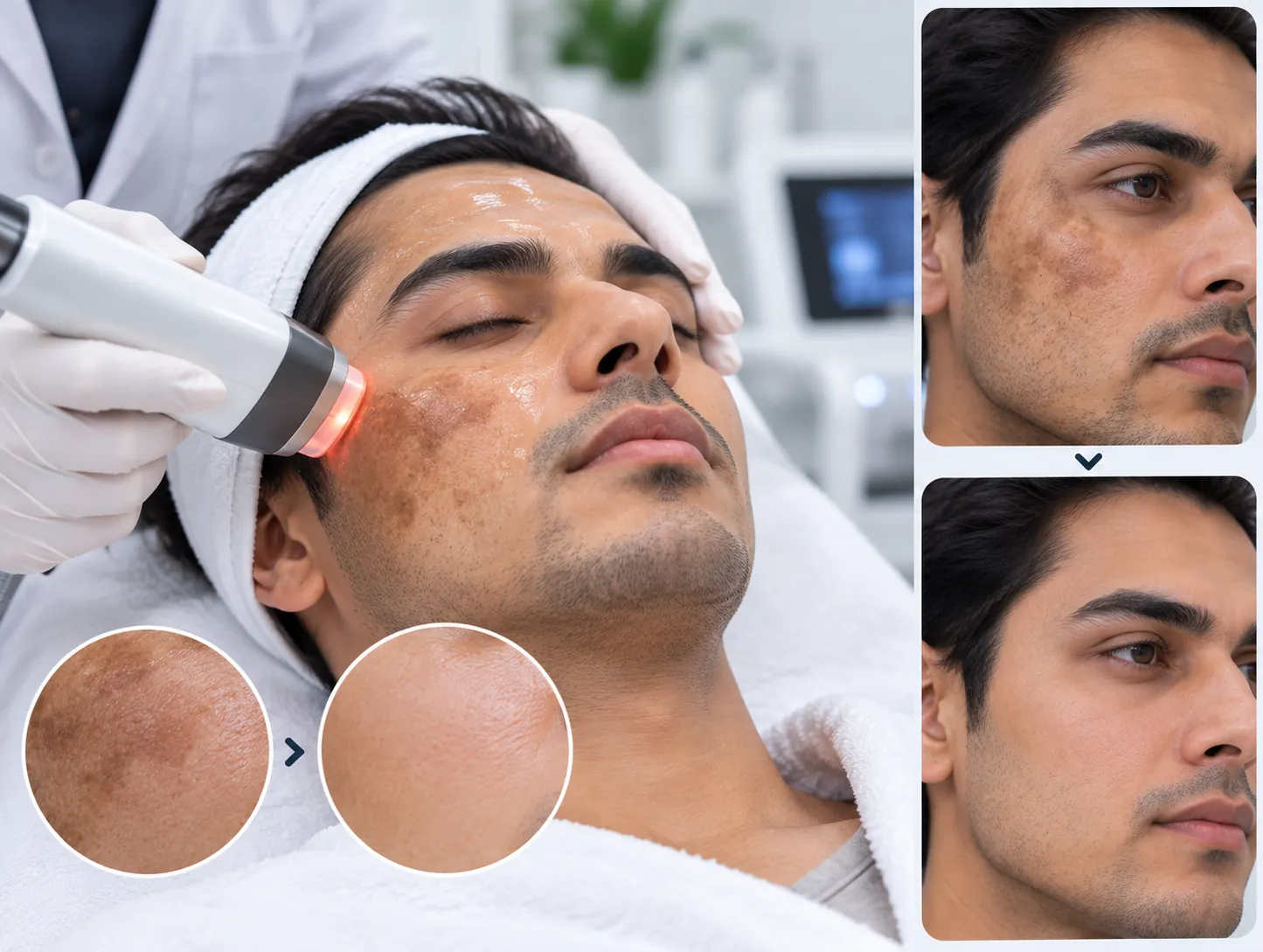
PRP (platelet-rich plasma) is one of the most popular non-surgical hair treatments. Used for the right person, it can reduce shedding and thicken weakening hair. Used for the wrong one, it is a waste of money — which is why diagnosis matters.
How PRP works
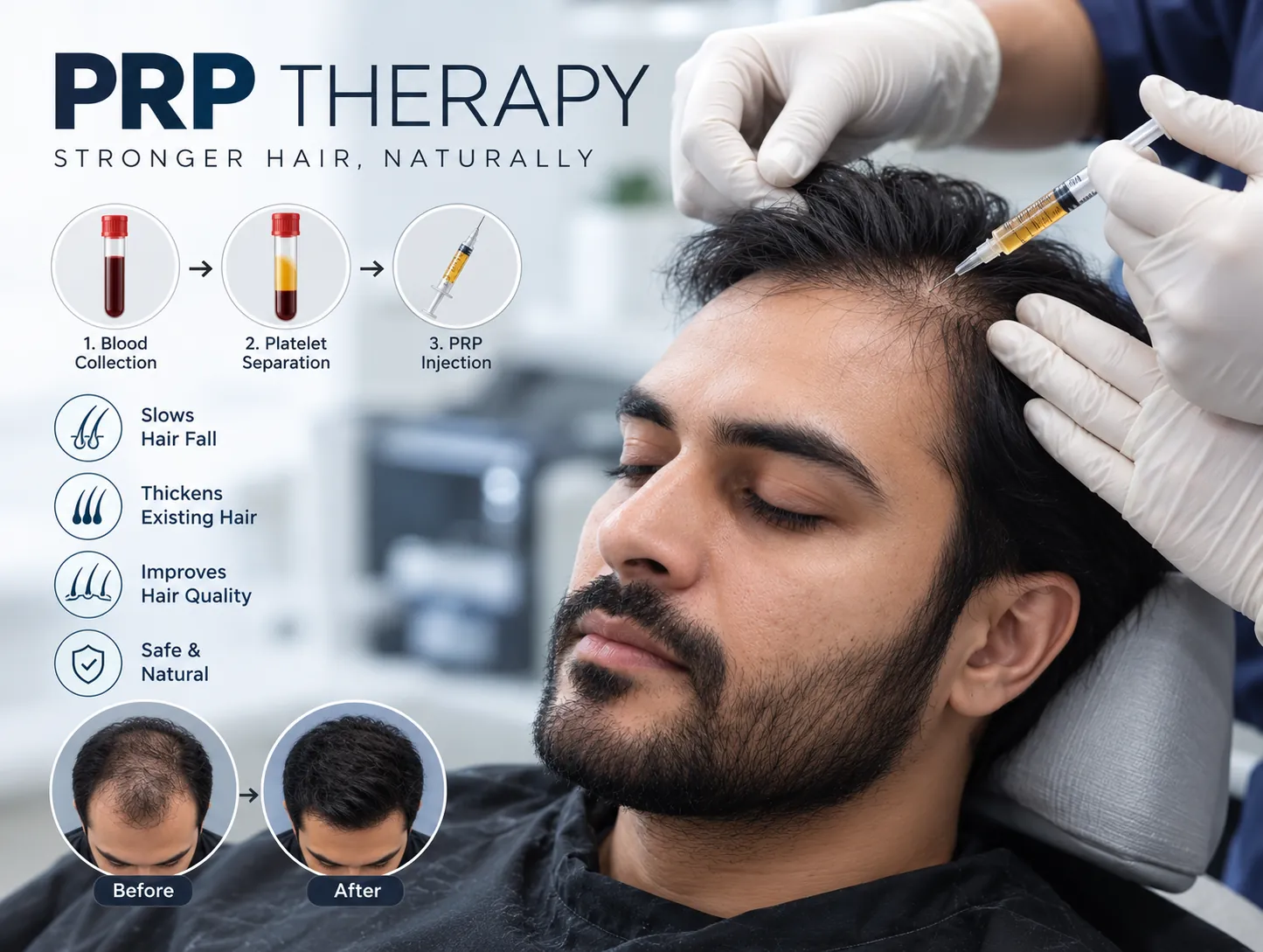
A small amount of your blood is drawn and spun to concentrate the platelets. That plasma, rich in growth factors, is injected into thinning areas of the scalp to support follicles that are still alive but weakening.
Who it helps
- Early pattern thinning in men and women.
- Diffuse thinning and a widening parting.
- Patients after a hair transplant, to support native hair.
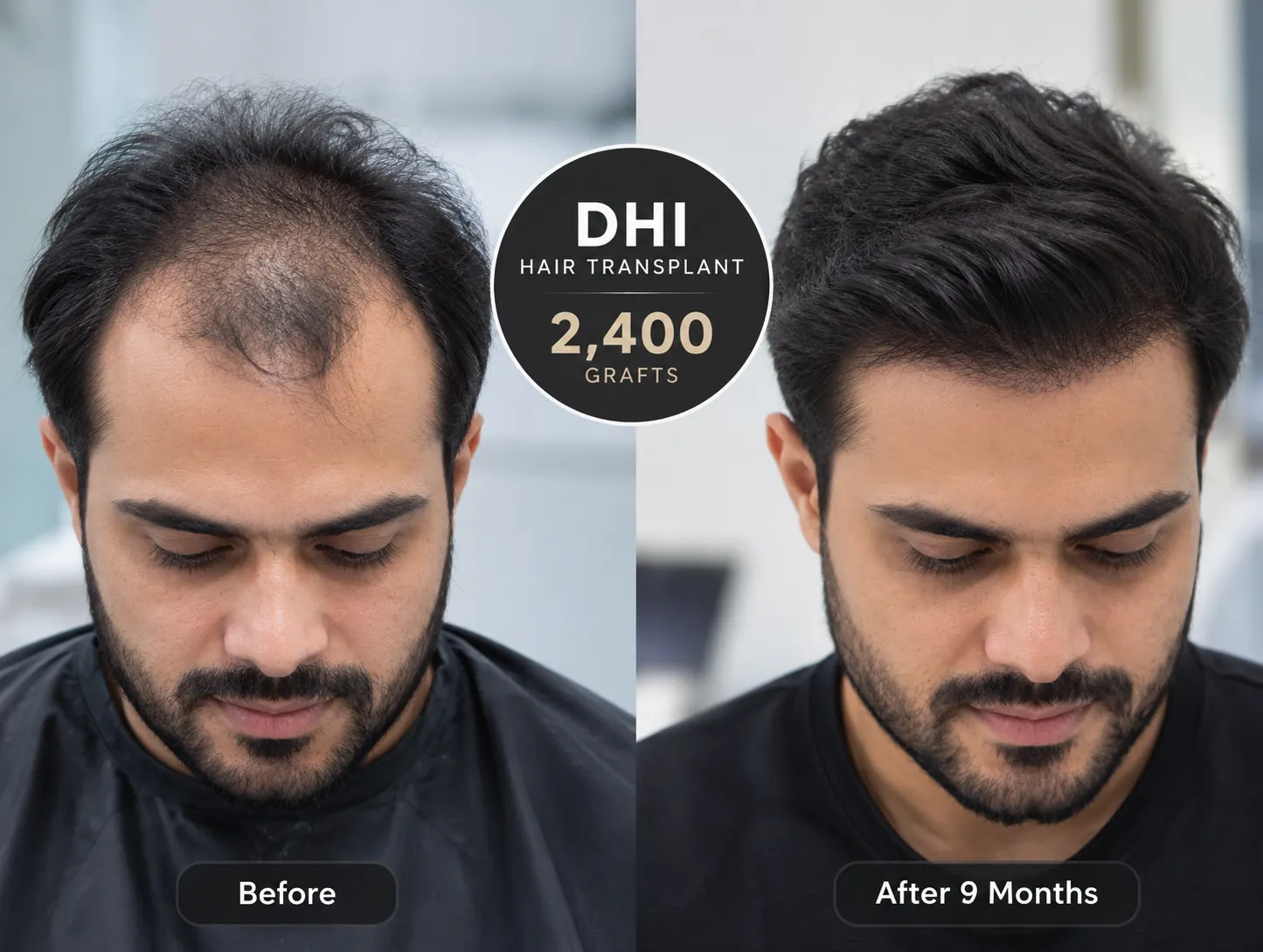
It does not regrow hair on areas that have been completely bald for years — those follicles are gone, and a transplant is the realistic option.
Sessions and results
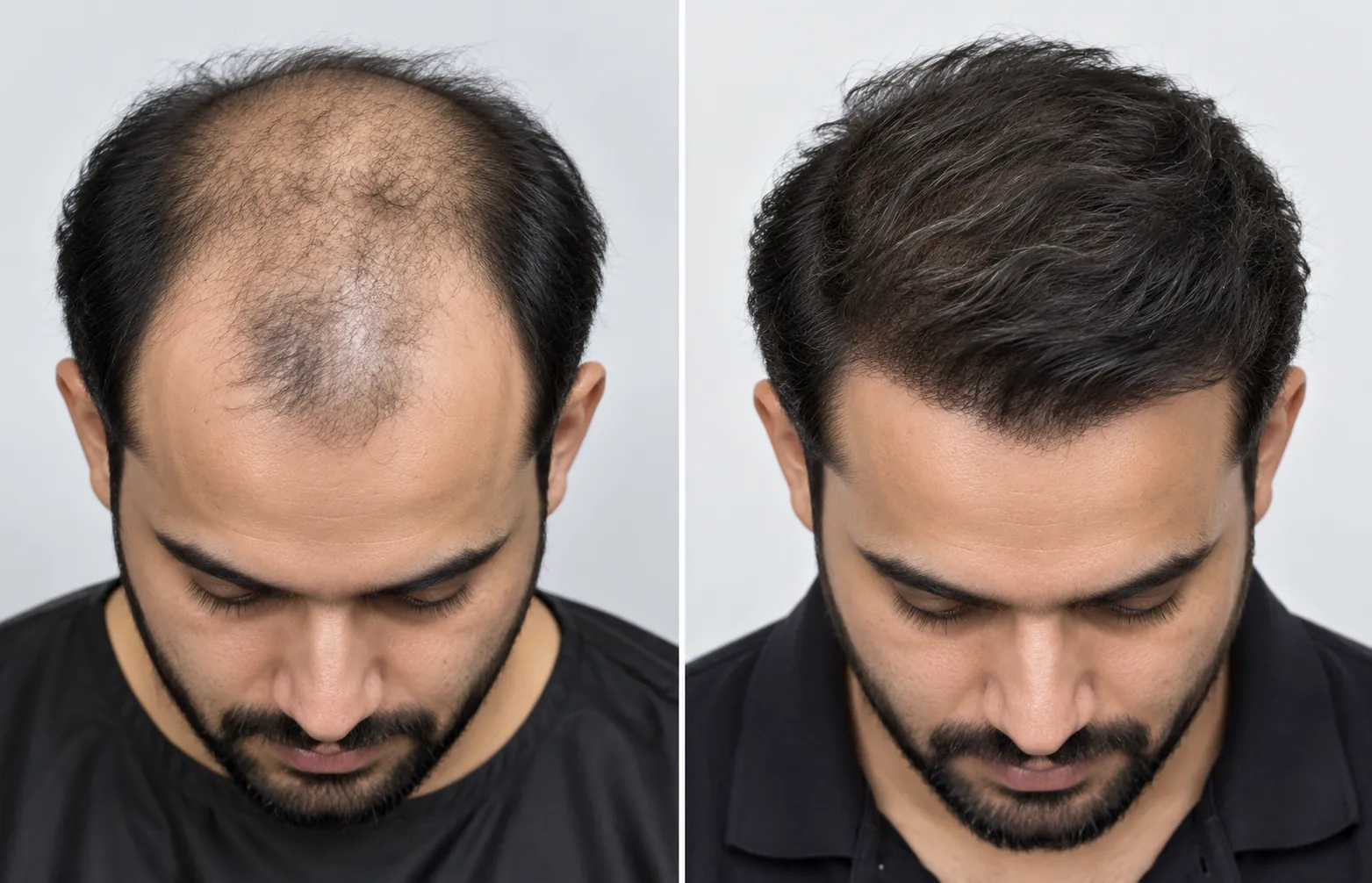
A typical course is 4 to 6 sessions, four to six weeks apart, followed by maintenance. Most people notice less shedding first, with thicker-looking hair after three to six months. Progress is best judged with standardised photos.
PRP vs GFC
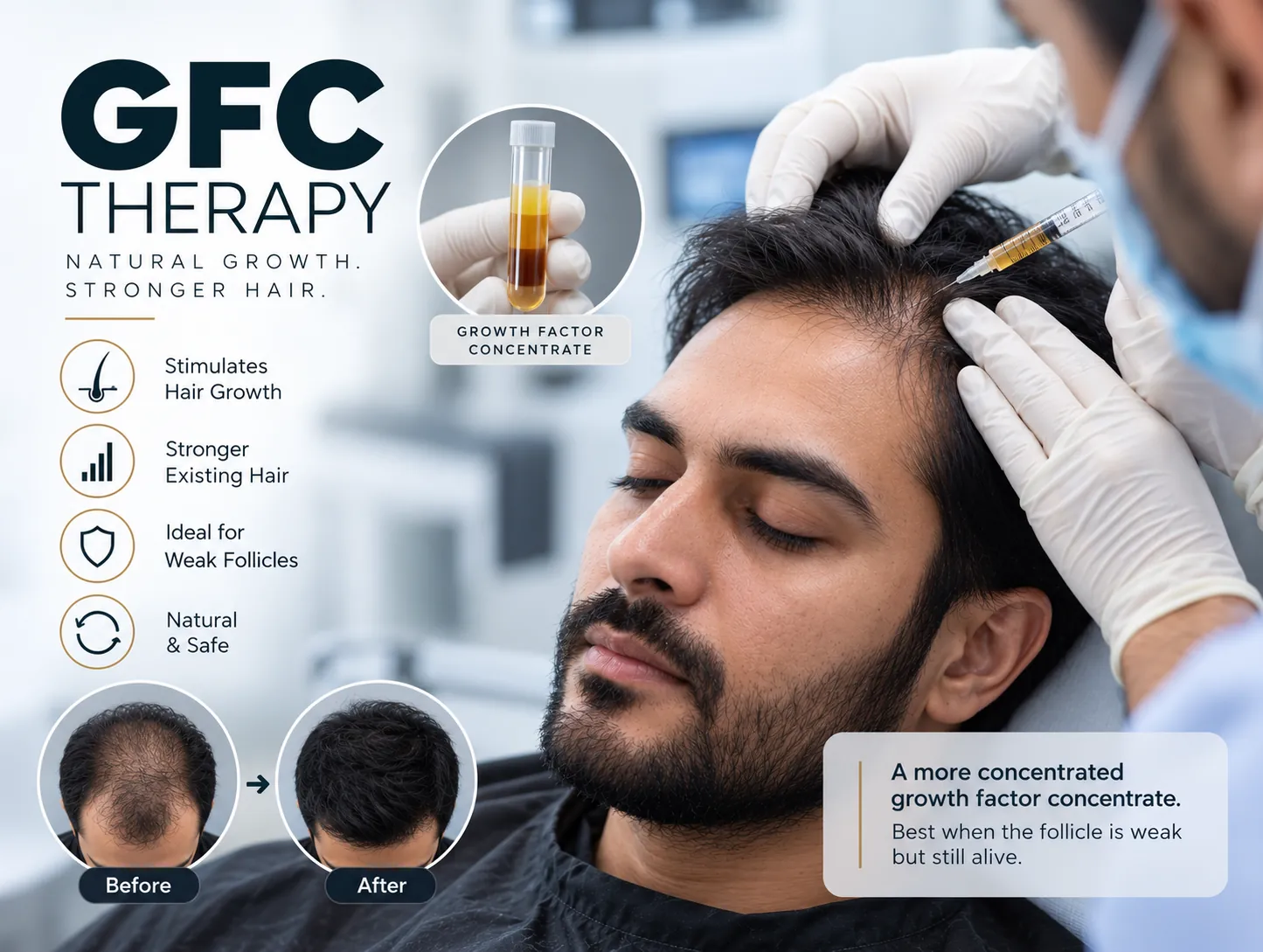
GFC (growth factor concentrate) is a more refined preparation from your own blood. Many patients find it more comfortable and some see faster results. Your doctor will suggest one based on your scalp and budget.
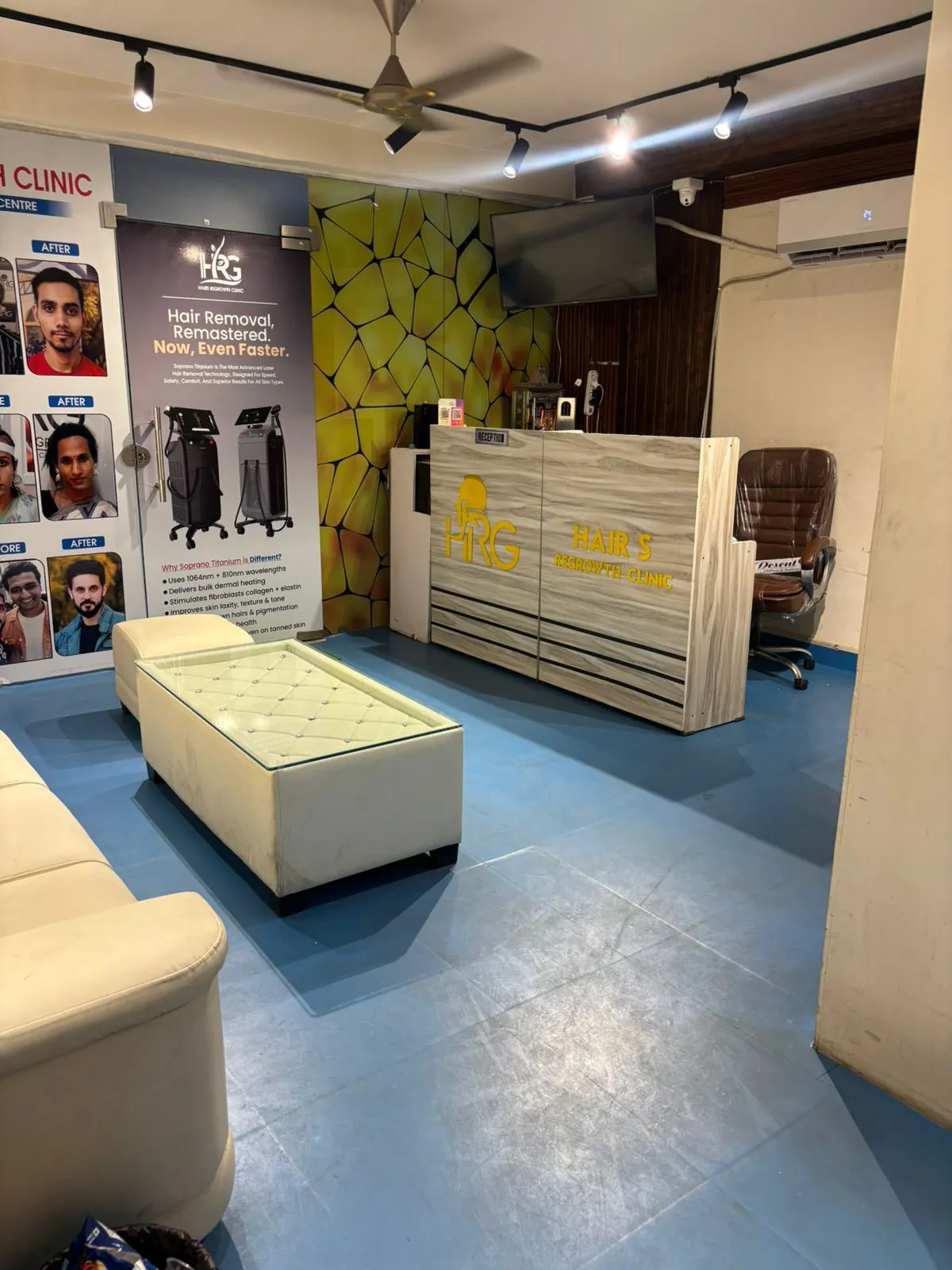
PRP at HRG, Sector 11 Rohini
Every PRP plan at HRG starts with a trichoscopy scan and checks for thyroid, iron and vitamin D issues, so treatment targets the real cause.